La historia · sourced, then invented
The filling has a history.
Tex-Mex was a railroad before it was a cuisine, a street trade before it was a restaurant, and an insult before it was a badge. The rail below is documented; our two entries at the end are the fiction, and they say so.
Lo de abajo es historia con fuentes. Lo nuestro es cuento — y está marcado.
“Tex-Mex” is a railroad
The Texas–Mexican Railway runs Corpus Christi to Laredo, and the hyphen rides its timetables for decades before anyone applies it to food. The word starts as infrastructure — which suits a cuisine built by people moving between two countries for work.
The chili queens of San Antonio
On Military Plaza, women sell chili con carne from lantern-lit tables into the small hours — the open-air counters that first put this cooking in front of the whole country, until health ordinances cleared the plazas in the 1940s. Every counter like ours descends from those tables.
The combination plate
Chili parlors and family cafés standardize the format that carries the cuisine everywhere: the Regular Plate — enchiladas, chili, rice, beans, the tortilla doing the binding. Number one, with cheese. The price was on the wall then, too.
The border gets drawn
Diana Kennedy's “The Cuisines of Mexico” separates interior Mexican cooking from what Texans ate every day — “Tex-Mex,” meant as a demotion. The cuisine keeps the name and wears it like a badge: yellow cheese, cumin, and no apology.
Tacos al carbon on Navigation
Ninfa Laurenzo starts rolling grilled beef into flour tortillas at her Houston tortilla factory; Sonny Falcon had been hawking fajitas at fairs since '69. Within a decade the fajita is national and sizzling platters pay half the rent in Texas.
Ten years on somebody else's line
Marisol Vega works the asada station at a chain she is too polite to name, and keeps a notebook: every price the register added after the customer nodded. The notebook gets thick. The idea gets simple — put the whole number on the wall.
Relleno opens by the depot
Two blocks from the Fullerton train, the notebook becomes a wall of prices and a counter line. Same plancha hours as the trains: late. The only thing hidden in the building is the horchata recipe.
Sources: Tex-Mex — the word and the railway · The chili queens of San Antonio · Sonny Falcon and the fajita · Ninfa Laurenzo, Navigation Boulevard — and Robb Walsh's The Tex-Mex Cookbook, the spine of the documented half.
The whole payroll
Three people run this counter.
Keeps the old notebook in the register drawer, under the till. When a supplier raises a price, the wall changes the same day — nothing on it changes quietly.
Runs the 11 PM–1 AM stretch and counts closes by the last train into the depot. Whoever walks in at 12:40 eats what the 1 PM crowd ate — that's his whole religion.
Hand-paints every price card on the wall, and repaints the whole row when one number changes so the new one never looks like a patch. Argue with her lettering at your peril.
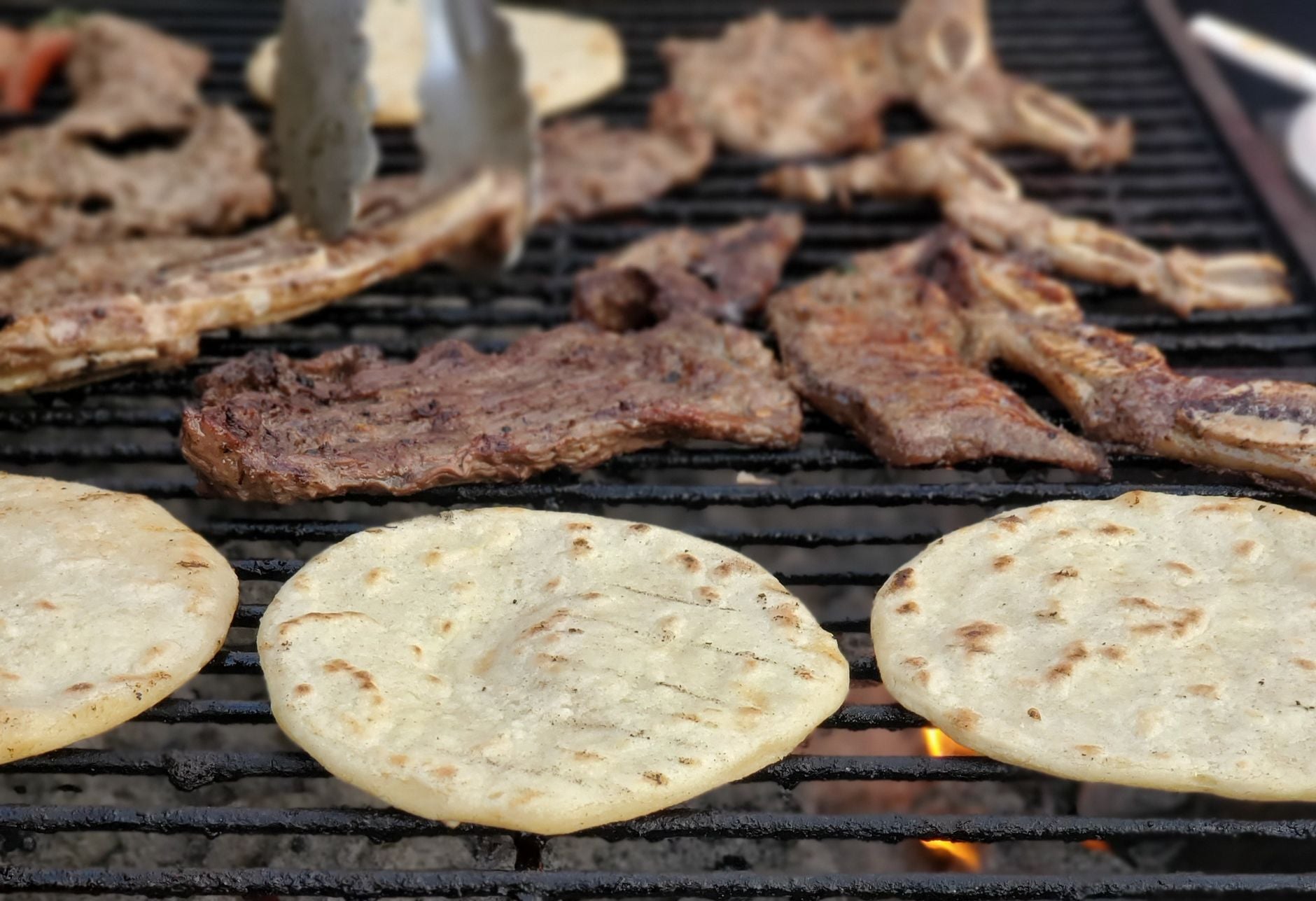
Chuck over charcoal — the asada station Marisol never left, even after she bought the whole counter. La plancha aguanta.